There is no cure for this disease. It is passed on from one generation to another, to at least one member of the family. The method of transmission seems to result from several sources, neither of which are possible to suppress or circumvent.
Onset of this disease often results during one’s high school years, where there is an unusual desire during American History class to dig deeper and learn if any of your ancestors came across on the Mayflower, was one of the original settlers in a community, ended up marrying a Native American Indian, or was murdered in the Salem Witch Trials.
If one isn’t infected by this disease at that point in time, it often invades our system when one of our close loved ones dies. All of a sudden this yearning to know about your heritage invades your entire body and you realize you have to get going on the search before any more of the “older generation” passes away, or you yourself get too much older and the family history is not recorded for the generations that will follow you. This is followed by a fever, a yearning desire to get started on this project immediately.
There is no cure, all you can do is take medication in order to subdue this disease. That means lots of research, whether it is by using the internet to get you started, or by visiting old courthouses for documents and finding old graveyards where your ancestors are buried. The brick walls that you encounter will keep you awake at night, those old buried bones seem to cry out to you “ find me find me” ! Sometimes the burning desire is so deep that you get up in the middle of the night, brew yourself another cup of coffee to help keep you awake and you pursue the hunt one more time! You try posting more information, rewording your request or the people that you are hunting for on one of the many genealogy message boards. It means searching records again, maybe this time for a sibling of your direct ancestor, or contacting others in the family who also suffer from this same disease. Consequently more and more websites are popping up on the internet as this disease spreads. Information can become available through the most unlikely sources sometimes. You know that you are truly addicted with this infection when you scrutinize each of the addresses of people who send you emails and they include the names of others on their lists to see if any of the Surnames match those you are looking for? Or if you have joined any Yahoo groups and you watch the names and where they live? .
I have so many different lines that I am following, that I often feel like Michael Jackson in the graveyard of his movie Thriller! All of those zombies, clamoring for his attention and the feeling of being overwhelmed by it all! There are times when I think ok, I’ll step back, work on just one line and guess what happens? Out of the blue I will get an email and it will be someone who is looking for the same people I am and they are related through one of the other offspring of the family. I end up once again picking up the torch and trying to light a pathway so that we are both able to find what we are looking for. So much for concentrating on just one line.
So I go back to my conglomeration of Moore’s the ones in my family from the North, being Michigan and Canada and the Moore’s from the South, being my son-in-law’s family, wondering if they will end up being connected somewhere along the way. The same with my Parker family from Illinois and his from Georgia, Tennessee, Arkansas, Texas and Oklahoma. Will all those Parker’s take me back to Chief Quanah Parker?
It is so difficult to try and stay centered on just one family! My cousins and I have tried that with our Decker line. We were fortunate enough to locate several more family researchers and we are all still trying to unravel the mystery of who exactly was Peter Decker’s wife! It would have been simple, if there weren’t more than just one Peter Decker, living in or near Passaic New Jersey, and who didn’t all name their children, using the same names of John, Andrew, Jacob, James and Isaac! They all lived in close proximity to one another and are often mixed up and end up in each other’s genealogy history. Once again, the need arises for as much accurate documentation as you can lay your hands on, and finding family bibles or journals which will be able to unravel the mess!
So as I start this new year, I am anxious to hear from all of you as to how you go about solving your brick walls. How do you stay centered on just one or two people to try and track down at a time?
Since there is no cure, I am looking for some other methods of finding solutions to these problems and the burning question…….. Who do you think you are?
This looks like a good book to add to my library! So many times we forget about the women and really need more ways to locate them.
Wednesday, January 19, 2011

Friday, November 19, 2010
Cherished Memories
I wanted to do an article about creating heirloom memories that can be passed from generation to generation and with Thanksgiving and Christmas right around the corner I thought I would share this family created heirloom with you.
When I was little, back in the 1940’s money was tight and the family wanted to do something special for my grandparents but were not sure exactly what to do. Then my mother came up with an idea that all family members could participate in and it wouldn’t be a strain on anyone’s pocketbook. She decided to make a holiday tablecloth and have everyone draw a simple picture of their child onto the tablecloth. The drawings were then painted to make them permanent. As I remember, each picture had the name of the grandchild it represented under it.
As I grew up, I can remember this tablecloth being used every year at Thanksgiving and Christmas get-togethers. After grandma died, I have no idea what happened to the tablecloth. I would love to know where it is today!
This might be a project that you would enjoy doing for your parents or grandparents. I can envision updating the idea using silhouette cutouts and including all members of a family group. Then as each generation comes along, adding them to the tablecloth as well. I think this would be so much fun to see how a family grows from generation to generation!
You would probably need about 31/2 to 4 yards of muslin as the base for your tablecloth. You could decide on what type of cutouts you would use, either simple gingerbread boys and girls, the old fashioned silhouettes, or hand drawn pictures directly onto the table cloth. I think it would be nice to put each child’s name and birth date under their picture. With so many families now spread out all over the country, having them each mail their family creations to one person to finish the construction would be the simplest thing to do.
If you get started now you can have this put together and under the tree for Grandma and Grandpa. Can you imagine how thrilled they will be?
What other suggestions do you have for making heirlooms to pass from generation to generation?
When I was little, back in the 1940’s money was tight and the family wanted to do something special for my grandparents but were not sure exactly what to do. Then my mother came up with an idea that all family members could participate in and it wouldn’t be a strain on anyone’s pocketbook. She decided to make a holiday tablecloth and have everyone draw a simple picture of their child onto the tablecloth. The drawings were then painted to make them permanent. As I remember, each picture had the name of the grandchild it represented under it.
As I grew up, I can remember this tablecloth being used every year at Thanksgiving and Christmas get-togethers. After grandma died, I have no idea what happened to the tablecloth. I would love to know where it is today!
This might be a project that you would enjoy doing for your parents or grandparents. I can envision updating the idea using silhouette cutouts and including all members of a family group. Then as each generation comes along, adding them to the tablecloth as well. I think this would be so much fun to see how a family grows from generation to generation!
You would probably need about 31/2 to 4 yards of muslin as the base for your tablecloth. You could decide on what type of cutouts you would use, either simple gingerbread boys and girls, the old fashioned silhouettes, or hand drawn pictures directly onto the table cloth. I think it would be nice to put each child’s name and birth date under their picture. With so many families now spread out all over the country, having them each mail their family creations to one person to finish the construction would be the simplest thing to do.
If you get started now you can have this put together and under the tree for Grandma and Grandpa. Can you imagine how thrilled they will be?
What other suggestions do you have for making heirlooms to pass from generation to generation?
Tuesday, November 9, 2010
Continuing Family History
As a family historian and amateur genealogist, I have found that delving into the past is a great adventure. It is interesting and exciting to learn about our ancestors and what their lives were like back in the “olden days.” There is something exhilarating about finding that lost relative and knocking down that brick wall!
But, in our quest to learn about the past history of our ancestors, are we forgetting about our families of the present? Are we keeping up with entering new arrivals into our families? Are we recording stories about our lives of today for future generations to enjoy? We need to be recording these things as well so that our children, grand children and great grand children will have first-hand knowledge of our lives and not have to just read about what the world was like when we were growing up in history books. We need to remember that someday we will be gone and someone (hopefully) is going to be looking for us!
Now that we have computers, it is so easy to start a journal of our lives and keep a running record of events. There are also web hosting locations where you can post your family tree either for free or for very little money. You can create settings where just family members are allowed in or you can leave it open for public viewing, the choice is yours. If you do set it up where only family members are allowed on your website, be sure to record passwords for access so that when you die, others in the family are able to get in and continue your work. I presently have one website set up as family access and have one other family member listed with administrator duties.
Make your family history come alive with photographs and stories of both those of ancestors and of current members of the family. Don’t let precious stories slip away and become distant memories.
You never know when someone else in the family will be bitten by the genealogy research bug. For some it comes early in life and for others, not until our golden years. In my case, it took the death of my mother to really become interested in doing more research. Granted, I had records already compiled from my father’s side of the family because of my earlier generations doing the research in order to become members of D.A.R.
In case you are not familiar with D.A.R. it stands for Daughters of the American Revolution. There are several other organizations that one might like to join such as the C.A.R. (Children of the American Revolution) or S.A.R. (Sons of the American Revolution).
There are also southern organizations such as S.C.V. (Sons of Confederate Veterans) and the United Daughters of the Confederacy for those with Southern roots, if you wish to join.
With the passing of each generation, my family tree is blooming and becoming a forest! I am one of these people who love to not only research direct descendants but also collateral lines, so my files are becoming very extensive. I only pray that when I am gone, my work will be preserved for future generations to explore and enjoy.
But, in our quest to learn about the past history of our ancestors, are we forgetting about our families of the present? Are we keeping up with entering new arrivals into our families? Are we recording stories about our lives of today for future generations to enjoy? We need to be recording these things as well so that our children, grand children and great grand children will have first-hand knowledge of our lives and not have to just read about what the world was like when we were growing up in history books. We need to remember that someday we will be gone and someone (hopefully) is going to be looking for us!
Now that we have computers, it is so easy to start a journal of our lives and keep a running record of events. There are also web hosting locations where you can post your family tree either for free or for very little money. You can create settings where just family members are allowed in or you can leave it open for public viewing, the choice is yours. If you do set it up where only family members are allowed on your website, be sure to record passwords for access so that when you die, others in the family are able to get in and continue your work. I presently have one website set up as family access and have one other family member listed with administrator duties.
Make your family history come alive with photographs and stories of both those of ancestors and of current members of the family. Don’t let precious stories slip away and become distant memories.
You never know when someone else in the family will be bitten by the genealogy research bug. For some it comes early in life and for others, not until our golden years. In my case, it took the death of my mother to really become interested in doing more research. Granted, I had records already compiled from my father’s side of the family because of my earlier generations doing the research in order to become members of D.A.R.
In case you are not familiar with D.A.R. it stands for Daughters of the American Revolution. There are several other organizations that one might like to join such as the C.A.R. (Children of the American Revolution) or S.A.R. (Sons of the American Revolution).
There are also southern organizations such as S.C.V. (Sons of Confederate Veterans) and the United Daughters of the Confederacy for those with Southern roots, if you wish to join.
With the passing of each generation, my family tree is blooming and becoming a forest! I am one of these people who love to not only research direct descendants but also collateral lines, so my files are becoming very extensive. I only pray that when I am gone, my work will be preserved for future generations to explore and enjoy.
Sunday, October 31, 2010
Is There A Witch In Your Family?
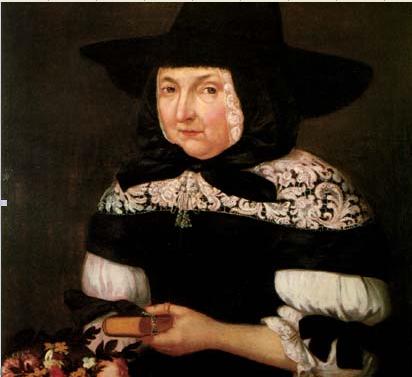
Mary Bliss Parsons Accused of Witchcraft
photograph taken from Wikipedia website but not validated by them that this is indeed a true photo of
Mary Bliss Parsons.
Since it is the time of year for witches and goblins and the celebration of Halloween, I figured it would be a good time to talk about witches, or supposed witches in our family trees. I get to claim Mary Bliss Parsons, who was the sister to Samuel Bliss, that I am descended from!
Probably one of the more famous women accused and acquitted of witchcraft was Mary Bliss Parsons, which actually happened in about 1654, many years prior to the famous Salem Witch Trials which started in 1692.
http://ccbit.cs.umass.edu/parsons/hnmockup/story.html
Mary Bliss, daughter of Thomas Bliss and Margaret , married Cornet Joseph Parsons in Hartford, CT in 1646. They lived in Springfield, Massachusetts for several years, where they had 3 children before moving to Northampton, in 1654. The Parsons had a total of 11 children. One of their sons, Ebenezer, was killed by Indians.
Joseph was a color-bearer in the Hampshire Troop of Horses, a prominent man in town of considerable wealth, working as a merchant and fur trader for the Pynchon family. He was also a selectman. He was licensed to keep an Ordinary, which today would be known as a tavern.
Supposedly a feud developed between the Parsons family and that of James and Sarah Bridgman who also migrated to Northampton the same year as the Parsons did. Rumors of witchcraft began to circulate shortly after their arrival, implying that the family’s success came at the expense of others and as the result of Mary’s dealings with the devil. Joseph Parsons, took the bull by the horns and initiated a slander case in 1656, in hopes of heading off these allegations. The record of this notable case will be found in Trumbull's History of Northampton, Vol.I, pp. 43-50; also on pages 228-234, copied from the original record now on file in Boston.
He won this case but 18 yrs later, Mary was officially accused of and tried for witchcraft in the year 1674/1675. Some records say that she was actually placed in jail in March of 1675 to await her trial but records from the actual trial did not survive. But on May 13, 1675 a jury found her not guilty. Even though she was eventually acquitted, some say that once again she was subject to another inquiry in 1679, but no records remain to prove this. Joseph and Mary packed up their family and left Northampton between 1679 -1680, amid lingering questions and gossip and they moved back to Springfield. Mary was a widow when she died in 1712, her husband preceded her in death by twenty-seven years.
The year before the famous Salem Witch trials, six Massachusetts women were hanged. and then twenty four innocent lives were taken during the Salem Witch Trials. The witch hunt began in Salem Village but spread to almost every town in Essex county. Before it was all said and done, 170 to 190 men, women and even children were accused. Many were held in jails in Ipswich, Salem, Boston, and Cambridge. Between the months of June and September 1692, nineteen people were hung, one was pressed to death and four died in prison awaiting trial. In 1693 the trials were ended.
There are now various theories as to what caused these bizarre accusations of witchcraft and being possessed by demons and casting of spells upon other people.
See http://ccbit.cs.umass.edu/parsons/hnmockup/witchcraft.html for related theories, and books, both factual and fictional regarding the witchcraft era.
Mary Bliss had the following siblings:
Ann who married Captain Robert Chapman
Thomas who married Elizabeth Birchard
Samuel who married Mary Leonard
Nathaniel who married Catherine Chapin
Lawrence who died in 1675
Sarah who first married John Scott, then Sam Terry and a Mr. Foot.
Elizabeth who married Miles Morgan (she was his 2nd wife)
Hannah who never married
Hester who married Ed Foster.
My descendant line:
Samuel Bliss who married Mary Leonard
Their son Thomas Bliss who married Hanna Cadwell
Their daughter Hannah Bliss who married Samuel Hubbard.
Even more information at this website
http://www.pcez.com/~bigshoe/shoegen.html many family lines at this website!
Tuesday, October 19, 2010
Tunnel Vision Searching For Ancestors
One thing that is easy to do when researching your ancestors is to get tunnel vision! You get so focused on your direct lineage that you can’t see the forest for the trees. You have to start learning to be a detective and look at all the clues that are out there.
Okay, so you hit a brick wall. Do you have the names of siblings? Have you searched for their records? You can often find their spouses and their children and where everyone is buried. Check the cemetery well because chances are you are going to find other relatives buried there, in fact you may even find the graves of the direct lineage you have been searching for!
By checking census reports for siblings, you can often find where family members have moved in together, perhaps hard times forced them to share a household or a sibling is now carrying for an elderly parent or parents.
Back in the olden days, many women died during or shortly after childbirth from complications. There were also epidemics of small pox, etc that wiped out many members of a family all at one time. Surviving children were often sent to live with relatives either for safety’s sake to get them away from such illnesses or because a surviving parent, usually a father in cases where the wife died at childbirth, is not capable of taking care of a house full of children. It was not unusual for there to be seven, eight, ten or even a dozen children. The older children might stay with the father, because they could help around the house. The girls could do cooking, cleaning, mending and caring for the younger siblings or the boys could help in the fields bringing in crops, The younger children, were often sent to live with relatives, brothers and sisters of the parents mostly. But it was not unheard of for even grandparents to step in and take the children to raise.
If you come across a census report, where you have relatives who all of a sudden have additional children living with them, where the ages just seem to send up a “red flag” that they are not close enough in age to the other children, or adults who are now parents of a young child and the wife is no longer of childbearing age, this should automatically make you ask “where did that child come from? Who do they really belong to?”
Another thing you need to be aware of is that the spelling of names changed over time and I don’t just mean last names but first names as well. Remember that your ancestors all originally came from foreign countries and their names would have been spelled as they were “in the old country.”
Because communities were close knit and sometimes because of religion, families often intermarried. A perfect example of that is within my own family lineage. I have Decker, DeBow, Ryerson’s that have intermarried from one generation to the next!
The other day I was working on trying to locate Tina DeBow, who is at least one of the wives of Peter Decker. Some have suggested that Tina DeBow could actually be Christina DeVoe! Peter also may have been married to Stintje (Stintie) De Mott. I have located other generations where there have been marriages with the DeBow or Debow name, so I am inclined to believe that the DeBow is correct. But, there is a chance that somewhere, somehow her name was transcribed incorrectly. Tina sends up a “red flag” to me as actually being her given name since that is not a name that was typical back in the 1700’s. So of course I have several courses of action to take here. I can look for Christina DeBow or Debow as well as Christina or Tina DeVoe or Devoe. Since there is a strong possibility that Peter married more than once, I also need to check for Stintje(Stintie) DeMott or Demott. Do you notice I am checking for various spellings? In checking cemetery listings, I have found the DeBow name spelled both ways.
I hope some of these hints will help you with your brick walls! I’d love to hear from you.
This book is excellent, with lots of places listed to look on line for information.
Okay, so you hit a brick wall. Do you have the names of siblings? Have you searched for their records? You can often find their spouses and their children and where everyone is buried. Check the cemetery well because chances are you are going to find other relatives buried there, in fact you may even find the graves of the direct lineage you have been searching for!
By checking census reports for siblings, you can often find where family members have moved in together, perhaps hard times forced them to share a household or a sibling is now carrying for an elderly parent or parents.
Back in the olden days, many women died during or shortly after childbirth from complications. There were also epidemics of small pox, etc that wiped out many members of a family all at one time. Surviving children were often sent to live with relatives either for safety’s sake to get them away from such illnesses or because a surviving parent, usually a father in cases where the wife died at childbirth, is not capable of taking care of a house full of children. It was not unusual for there to be seven, eight, ten or even a dozen children. The older children might stay with the father, because they could help around the house. The girls could do cooking, cleaning, mending and caring for the younger siblings or the boys could help in the fields bringing in crops, The younger children, were often sent to live with relatives, brothers and sisters of the parents mostly. But it was not unheard of for even grandparents to step in and take the children to raise.
If you come across a census report, where you have relatives who all of a sudden have additional children living with them, where the ages just seem to send up a “red flag” that they are not close enough in age to the other children, or adults who are now parents of a young child and the wife is no longer of childbearing age, this should automatically make you ask “where did that child come from? Who do they really belong to?”
Another thing you need to be aware of is that the spelling of names changed over time and I don’t just mean last names but first names as well. Remember that your ancestors all originally came from foreign countries and their names would have been spelled as they were “in the old country.”
Because communities were close knit and sometimes because of religion, families often intermarried. A perfect example of that is within my own family lineage. I have Decker, DeBow, Ryerson’s that have intermarried from one generation to the next!
The other day I was working on trying to locate Tina DeBow, who is at least one of the wives of Peter Decker. Some have suggested that Tina DeBow could actually be Christina DeVoe! Peter also may have been married to Stintje (Stintie) De Mott. I have located other generations where there have been marriages with the DeBow or Debow name, so I am inclined to believe that the DeBow is correct. But, there is a chance that somewhere, somehow her name was transcribed incorrectly. Tina sends up a “red flag” to me as actually being her given name since that is not a name that was typical back in the 1700’s. So of course I have several courses of action to take here. I can look for Christina DeBow or Debow as well as Christina or Tina DeVoe or Devoe. Since there is a strong possibility that Peter married more than once, I also need to check for Stintje(Stintie) DeMott or Demott. Do you notice I am checking for various spellings? In checking cemetery listings, I have found the DeBow name spelled both ways.
I hope some of these hints will help you with your brick walls! I’d love to hear from you.
This book is excellent, with lots of places listed to look on line for information.
Thursday, September 30, 2010
The Amish People
The Amish are a very traditional subgroup of the Mennonite churches. They are known for their simple living, plain dress and reluctance to adopt modern conveniences. Their communities are usually very laid back, a calm relaxed atmosphere, where everyone helps everyone else.
The Amish began in Switzerland within a group of Swiss and Alsatian Anabaptists and was led by Jakob Ammann. The followers mainly came from the German speaking parts of Switzerland, the Alsace of France and the Palatinate of Germany. Many Amish and Mennonites emigrated to Pennsylvania. Even today the most traditional descendants of the Amish speak Pennsylvania German also known as Pennsylvania Dutch. There are those who still have the dialect of Swiss German, in the Old Order Amish communities, especially in Indiana. The Amish, like the Mennonites, have split many times over the years.
In the Amish religion, babies are not baptized. Baptism usually occurs between 16 and 25, and is a requirement for marriage.Once a person has affiliated with the church, they may only marry within the faith.
Many Amish church members may not buy insurance or accept government assistance, such as Social Security. As Anabaptist, members practice nonresistance and will not perform any type of military service. There is a heavy emphasis on church and family relationships. They have their own schools, usually a one room school house and discontinue formal education at 8th grade. They value rural life, manual labor and humility. Due to intermarriage, among their relatively small original population, some groups have increased incidences of certain inheritable conditions.
The Amish are among the fastest growing populations in the world with 6.8 children per family. From 1992-2008 the Amish in North America population growth was at 84% and they established 184 new settlements and moved into 6 new states. There are 27 Old Order communities in the U S and Canada. Pennsylvania and Indiana, central Ohio, Lancaster Co in Pennsylvania, Elkhart and La Grange in Indiana are the largest concentration of Amish. West of the Mississippi river in Missouri, then into eastern Iowa and Southern Minnesota.
Amish are mostly of Swiss German ancestry. The first Amish to America went to Berks Co, PA but later moved, motivated by land issues and by security concerns tied to the French and Indian War. Many eventually settled in Lancaster Co, PA. Others spread to Alabama, Delaware, Illinois, Indiana, Iowa, Kansas. Kentucky. Michigan, Minnesota, Mississippi, Missouri, Nebraska, New York, Ohio, Maryland, Tennessee, Wisconsin and Maine, as well as Canada.
The majority of the Old Order Amish congregations do not have church buildings but meet in private homes and because of this are sometimes called “House Amish”. Congregations are made up of 25-30 neighboring farm or related families. Their properties are adjacent and are encircled with a congregations physical boundary and is the only congregation available for membership. Therefore, each member is a neighbor! Congregations meet every other week for the entire Sunday at a member family’s farm.
They are very humble people, placing into practice their rejection of pride, arrogance and haughtiness and place high value on calmness, composure and placidity… often translated as submission or “letting be” they are reluctant to be forward, self promoting or to assert oneself. They submit to the Will of God.
They prefer to work at home, although many have now had to work in construction and manufacturing in in some areas where there is good tourist trade to engage in shop work and crafts for profit. The Amish quits are a genuine cultural inheritance. Amish lifestyles vary and sometimes not only between communities but within communities. Some are conservative, others allow automobiles but require they be black, some of the Old Order groups may even vary over the type of suspenders that males are required to wear, if any or how many pleats there should be in a bonnet or if one is required at all!
Some of the strictest Old Order Amish are the Nebraska Amish (“white top Amish”) Troyer Amish and the Swartzendruber Amish. Most Old Order Amish still speak Pennsylvania German in the home, with the exception of several areas in the Midwest where a variety of Swiss German is spoken.
In both Adams Co and Allen Co Indiana, the old order Amish use only wooden grave markers which eventually decay and disappear making it difficult to locate graves. They are usually buried in Amish cemeteries. More recently, they purchase gravestones that lay flat on the ground, are uniform, of modest and plain design, and thankfully are now inscribed in English.
Marriage to a 1st cousin is not allowed among the Amish and a second cousin relationship is frowned upon, though they may occur. Marriage to a “Schwartz” (1st cousin once removed) is not permitted in Lancaster County. Weddings were typically held on Tuesday and Thursday in November to early December after the harvest was in. The bride wears no makeup, and will not receive an engagement or wedding ring because the "Ordnung" prohibits personal jewelry. In colonial days, newlyweds spend the wedding night at the home of the bride’s parents.
Elderly do not go to a retirement facility; they remain at home. If the family house is large enough they continue living with everyone else. Often there is an adjacent dwelling called the "Grossdaadi," where grandparents take up residency. Retired people continue to help with work on the farm and in the home, working at their own pace as they are able. If the aged become ill or infirm, then other family members take care of them.
The Older Order Amish are known for their avoidance of certain modern conveniences. Electricity is used in some situations when it can be produced without access to outside power lines. Batteries are sometimes acceptable. Electric generators may be used for such things as welding, recharging batteries, and powering milk stirrers in some communities. They will use have non-electric versions of appliances, such as kerosene powered refrigerators while others may allow thermal solar panels. The Amish will use chemical pesticides and fertilizers, which I find strange!
If a person becomes disabled, they are allowed to use motorized wheelchairs and electricity is allowed in the home for medical equipment. Most will not drive cars, but will hire drivers and vans for visiting family,or other trips that might take them off the farm. Regular bus service between Amish communities has been established in some areas and train travel is accepted. In some areas it is not uncommon to see their traditional buggies going down the road.
Depending on what community of Amish you are in, some groups limit color to black trousers and dresses and white shirts, while others allow muted colors. Dark blue denim work clothing is common within some groups as well. The old order Amish often sew their own clothing . Even today, hook and eye or straight pins are used on dresses, rather than buttons, zippers or Velcro. Snaps are used on everyday clothes, whereas plain buttons are used on work shirts and trousers.
Women wear calf length plain cut dresses in a solid color. Aprons are often worn at home, usually in white or black and are always worn when attending church. A cape, consisting of a triangular piece of cloth is usually worn, beginning around ten years and pinned into the apron. In colder weather, a long woolen cloak may be worn. Heavy bonnets are worn over the prayer coverings when Amish women are out and about in the cold Strange as it may seem, the Nebraska Amish women do not wear bonnets. Girls in some areas wear colored bonnets until age 9, older girls and women wear black bonnets. During the summer many children go barefoot even while attending school.
Men usually wear dark trousers, some with dark vest or coat, suspenders (in some communities) broad rimmed straw hats in the summer and black felt in the colder months. However, some, mostly teens, may deviate from these customs to convey someone’s individuality. Married men and those over 40 grow a beard, although mustaches are forbidden. A beard may serve the same symbolic function, in some Old Order Amish settings as a wedding ring, and marks the passage into manhood.
Amish have higher incidences of some genetic disorders,which may include dwarfism, various metabolic disorders and unusual distribution of blood types. Since all Amish descend from about two hundred 18th century founders, genetic disorders form inbreeding exist in more isolated districts. Some are quite rare or unique and are serious enough to increase the mortality rate among Amish children.
The Amish began in Switzerland within a group of Swiss and Alsatian Anabaptists and was led by Jakob Ammann. The followers mainly came from the German speaking parts of Switzerland, the Alsace of France and the Palatinate of Germany. Many Amish and Mennonites emigrated to Pennsylvania. Even today the most traditional descendants of the Amish speak Pennsylvania German also known as Pennsylvania Dutch. There are those who still have the dialect of Swiss German, in the Old Order Amish communities, especially in Indiana. The Amish, like the Mennonites, have split many times over the years.
In the Amish religion, babies are not baptized. Baptism usually occurs between 16 and 25, and is a requirement for marriage.Once a person has affiliated with the church, they may only marry within the faith.
Many Amish church members may not buy insurance or accept government assistance, such as Social Security. As Anabaptist, members practice nonresistance and will not perform any type of military service. There is a heavy emphasis on church and family relationships. They have their own schools, usually a one room school house and discontinue formal education at 8th grade. They value rural life, manual labor and humility. Due to intermarriage, among their relatively small original population, some groups have increased incidences of certain inheritable conditions.
The Amish are among the fastest growing populations in the world with 6.8 children per family. From 1992-2008 the Amish in North America population growth was at 84% and they established 184 new settlements and moved into 6 new states. There are 27 Old Order communities in the U S and Canada. Pennsylvania and Indiana, central Ohio, Lancaster Co in Pennsylvania, Elkhart and La Grange in Indiana are the largest concentration of Amish. West of the Mississippi river in Missouri, then into eastern Iowa and Southern Minnesota.
Amish are mostly of Swiss German ancestry. The first Amish to America went to Berks Co, PA but later moved, motivated by land issues and by security concerns tied to the French and Indian War. Many eventually settled in Lancaster Co, PA. Others spread to Alabama, Delaware, Illinois, Indiana, Iowa, Kansas. Kentucky. Michigan, Minnesota, Mississippi, Missouri, Nebraska, New York, Ohio, Maryland, Tennessee, Wisconsin and Maine, as well as Canada.
The majority of the Old Order Amish congregations do not have church buildings but meet in private homes and because of this are sometimes called “House Amish”. Congregations are made up of 25-30 neighboring farm or related families. Their properties are adjacent and are encircled with a congregations physical boundary and is the only congregation available for membership. Therefore, each member is a neighbor! Congregations meet every other week for the entire Sunday at a member family’s farm.
They are very humble people, placing into practice their rejection of pride, arrogance and haughtiness and place high value on calmness, composure and placidity… often translated as submission or “letting be” they are reluctant to be forward, self promoting or to assert oneself. They submit to the Will of God.
They prefer to work at home, although many have now had to work in construction and manufacturing in in some areas where there is good tourist trade to engage in shop work and crafts for profit. The Amish quits are a genuine cultural inheritance. Amish lifestyles vary and sometimes not only between communities but within communities. Some are conservative, others allow automobiles but require they be black, some of the Old Order groups may even vary over the type of suspenders that males are required to wear, if any or how many pleats there should be in a bonnet or if one is required at all!
Some of the strictest Old Order Amish are the Nebraska Amish (“white top Amish”) Troyer Amish and the Swartzendruber Amish. Most Old Order Amish still speak Pennsylvania German in the home, with the exception of several areas in the Midwest where a variety of Swiss German is spoken.
In both Adams Co and Allen Co Indiana, the old order Amish use only wooden grave markers which eventually decay and disappear making it difficult to locate graves. They are usually buried in Amish cemeteries. More recently, they purchase gravestones that lay flat on the ground, are uniform, of modest and plain design, and thankfully are now inscribed in English.
Marriage to a 1st cousin is not allowed among the Amish and a second cousin relationship is frowned upon, though they may occur. Marriage to a “Schwartz” (1st cousin once removed) is not permitted in Lancaster County. Weddings were typically held on Tuesday and Thursday in November to early December after the harvest was in. The bride wears no makeup, and will not receive an engagement or wedding ring because the "Ordnung" prohibits personal jewelry. In colonial days, newlyweds spend the wedding night at the home of the bride’s parents.
Elderly do not go to a retirement facility; they remain at home. If the family house is large enough they continue living with everyone else. Often there is an adjacent dwelling called the "Grossdaadi," where grandparents take up residency. Retired people continue to help with work on the farm and in the home, working at their own pace as they are able. If the aged become ill or infirm, then other family members take care of them.
The Older Order Amish are known for their avoidance of certain modern conveniences. Electricity is used in some situations when it can be produced without access to outside power lines. Batteries are sometimes acceptable. Electric generators may be used for such things as welding, recharging batteries, and powering milk stirrers in some communities. They will use have non-electric versions of appliances, such as kerosene powered refrigerators while others may allow thermal solar panels. The Amish will use chemical pesticides and fertilizers, which I find strange!
If a person becomes disabled, they are allowed to use motorized wheelchairs and electricity is allowed in the home for medical equipment. Most will not drive cars, but will hire drivers and vans for visiting family,or other trips that might take them off the farm. Regular bus service between Amish communities has been established in some areas and train travel is accepted. In some areas it is not uncommon to see their traditional buggies going down the road.
Depending on what community of Amish you are in, some groups limit color to black trousers and dresses and white shirts, while others allow muted colors. Dark blue denim work clothing is common within some groups as well. The old order Amish often sew their own clothing . Even today, hook and eye or straight pins are used on dresses, rather than buttons, zippers or Velcro. Snaps are used on everyday clothes, whereas plain buttons are used on work shirts and trousers.
Women wear calf length plain cut dresses in a solid color. Aprons are often worn at home, usually in white or black and are always worn when attending church. A cape, consisting of a triangular piece of cloth is usually worn, beginning around ten years and pinned into the apron. In colder weather, a long woolen cloak may be worn. Heavy bonnets are worn over the prayer coverings when Amish women are out and about in the cold Strange as it may seem, the Nebraska Amish women do not wear bonnets. Girls in some areas wear colored bonnets until age 9, older girls and women wear black bonnets. During the summer many children go barefoot even while attending school.
Men usually wear dark trousers, some with dark vest or coat, suspenders (in some communities) broad rimmed straw hats in the summer and black felt in the colder months. However, some, mostly teens, may deviate from these customs to convey someone’s individuality. Married men and those over 40 grow a beard, although mustaches are forbidden. A beard may serve the same symbolic function, in some Old Order Amish settings as a wedding ring, and marks the passage into manhood.
Amish have higher incidences of some genetic disorders,which may include dwarfism, various metabolic disorders and unusual distribution of blood types. Since all Amish descend from about two hundred 18th century founders, genetic disorders form inbreeding exist in more isolated districts. Some are quite rare or unique and are serious enough to increase the mortality rate among Amish children.
Mennonites
This is among the Anabaptist religions, starting in the German and Dutch speaking parts of central Europe. They were relentlessly persecuted during the 16th century and then by the 17th century some of them joined the state church in Switzerland. Mennonites ouside the state church were divided about whether to stay with those who had joined the state church or not and they broke away and became the Amish, so named by their founder Jacob Amman.
Their teachings were founded on their belief in both the mission and ministry of Jesus Christ, which they held to with great conviction despite persecution by various Roman Catholic and Protestant states. One of the reasons they were persecuted so was because of their belief in adult baptism and do not believe in infant baptism, which was far from the belief of the Roman Catholic church who believed one should be baptized and become a member of the church at birth. The Mennonites feel that there should be complete separation of church and government. Rather than fight, many sled to neighboring states in order to survived. They believed in nonviolence. They are often called “plain people” although some dress just as the general population does.
There was a group of Quakers and Mennonites that came to American under the solicitation of William Penn who was looking for settlers for his new colony. The first permanent settlement of Mennonites in the colonies consisted of one Mennonite family and 12 Mennonite-Quaker families of Dutch extraction who arrived from Krefeld Germany in 1683 and settled in Germantown, Pennsylvania. Early settlers were William Rittenhouse, a lay minister who was the owner of the first America paper mill, Jacob Gottschalk, who was the first bishop of the Germantown congregation. They were the first group of Mennonites.
In the 18th Century, Germans from the Palatinate, known as Pennsylvania Dutch, emigrated to Pennsylvania,. among these were Mennonites and Amish. And they settled in Lancaster Pennsylvania. Christopher Dock was among this group.
During the colonial period, Mennonites were distinguished from other Pennsylvania. Germans by their opposition to the American Revolutionary War, resistance to public education and disapproval of religious revivalism.
From 1812 to 1860 more immigrants settled in Ohio , Nebraska,Illinois, and Missouri.. They were Swiss-German speaking Mennonites, and Amish and came from Switzerland. Later moved on into Kansas.
Their teachings were founded on their belief in both the mission and ministry of Jesus Christ, which they held to with great conviction despite persecution by various Roman Catholic and Protestant states. One of the reasons they were persecuted so was because of their belief in adult baptism and do not believe in infant baptism, which was far from the belief of the Roman Catholic church who believed one should be baptized and become a member of the church at birth. The Mennonites feel that there should be complete separation of church and government. Rather than fight, many sled to neighboring states in order to survived. They believed in nonviolence. They are often called “plain people” although some dress just as the general population does.
There was a group of Quakers and Mennonites that came to American under the solicitation of William Penn who was looking for settlers for his new colony. The first permanent settlement of Mennonites in the colonies consisted of one Mennonite family and 12 Mennonite-Quaker families of Dutch extraction who arrived from Krefeld Germany in 1683 and settled in Germantown, Pennsylvania. Early settlers were William Rittenhouse, a lay minister who was the owner of the first America paper mill, Jacob Gottschalk, who was the first bishop of the Germantown congregation. They were the first group of Mennonites.
In the 18th Century, Germans from the Palatinate, known as Pennsylvania Dutch, emigrated to Pennsylvania,. among these were Mennonites and Amish. And they settled in Lancaster Pennsylvania. Christopher Dock was among this group.
During the colonial period, Mennonites were distinguished from other Pennsylvania. Germans by their opposition to the American Revolutionary War, resistance to public education and disapproval of religious revivalism.
From 1812 to 1860 more immigrants settled in Ohio , Nebraska,Illinois, and Missouri.. They were Swiss-German speaking Mennonites, and Amish and came from Switzerland. Later moved on into Kansas.
Dunkards
Also known as The Church of the Brethren and sometimes confused with the Moravians which were totally different. Dunkards were formed in 1708 in Schwarzenau, Wittenburg Germany by Alexander Mack.
This group came to America and settled in Pennsylvania.
The Swiss/German sect, much like the Mennonites, Moravians, etc. were called Dunkards or Dunkers, because they believed in baptism by dunking or total immersion rather than just the sprinkling of holy water on the head.
They wore plain clothing, coats with standing collars for men, plain bonnets and hoods for women. Men were urged but not required to wear beards; they should not wear mustaches alone. Women should not wear jewelry. They were to avoid narcotics, including tobacco and didn’t use instruments of music in the house of God.
The observed the Lord’s Supper (full meal, with soup eaten from a common dish) and communion of the bread and cup after the meal. This was usually held once in the spring and once in the fall. They did not celebrate holidays such as Thanksgiving or Christmas.
The were to obey civil government as far as it’s laws didn’t conflict with their religion. They were not to participate in politics and not allowed to affiliate with secret societies or lodges. They would not take nor subscribe to an oath and considered slavery abhorrent. They believed in nonresistance, and would not participate in the Revolutionary War.
Indians learned Dunkards wouldn’t resist so they raided their homes.
They stayed to themselves and spoke only German and stayed out of trouble
Prior to1800 Dunkards could be excommunicated for obtaining a marriage license or bond. Hence locating marriage bonds prior to 1820 for both Dunkards and Mennonites is very difficult.
They mainly lived in PA., VA and the Carolinas, eventually moving some to OH and MS valleys
Part of the group of religions known as Anabaptist communities; Hutterites, Amish, Dunkards, Apostolic Christian and Old Order Mennonites are all Anabaptist. They believe in the simple life and reject some or most of the modern world.
This group came to America and settled in Pennsylvania.
The Swiss/German sect, much like the Mennonites, Moravians, etc. were called Dunkards or Dunkers, because they believed in baptism by dunking or total immersion rather than just the sprinkling of holy water on the head.
They wore plain clothing, coats with standing collars for men, plain bonnets and hoods for women. Men were urged but not required to wear beards; they should not wear mustaches alone. Women should not wear jewelry. They were to avoid narcotics, including tobacco and didn’t use instruments of music in the house of God.
The observed the Lord’s Supper (full meal, with soup eaten from a common dish) and communion of the bread and cup after the meal. This was usually held once in the spring and once in the fall. They did not celebrate holidays such as Thanksgiving or Christmas.
The were to obey civil government as far as it’s laws didn’t conflict with their religion. They were not to participate in politics and not allowed to affiliate with secret societies or lodges. They would not take nor subscribe to an oath and considered slavery abhorrent. They believed in nonresistance, and would not participate in the Revolutionary War.
Indians learned Dunkards wouldn’t resist so they raided their homes.
They stayed to themselves and spoke only German and stayed out of trouble
Prior to1800 Dunkards could be excommunicated for obtaining a marriage license or bond. Hence locating marriage bonds prior to 1820 for both Dunkards and Mennonites is very difficult.
They mainly lived in PA., VA and the Carolinas, eventually moving some to OH and MS valleys
Part of the group of religions known as Anabaptist communities; Hutterites, Amish, Dunkards, Apostolic Christian and Old Order Mennonites are all Anabaptist. They believe in the simple life and reject some or most of the modern world.
Quakers
Also known as The Society of Friends
Migration began between 1675 and 1725, leaving the North Midlands of England and coming to American to the Delaware River area of Pennsylvania and West Jersey. Some were in New England earlier, they weren’t Quakers when they arrived. They came as Puritans and were converted a to Quakers
In the 1650-1660’s they were driven out of Massachusetts Bay Colony and went to Rhode Island and places beyond. The ones coming in 1675, came as Quakers from England because they were being persecuted but more so because they felt called to a spiritual pilgrimage. Quakers came from the lower middle class of English society. They were farmers, craftsmen, laborers and servants.
There was no “in-law relationships. If you married into the family, you became son or daughter or cousin!
Quaker families were a bit smaller than Puritan families there were fewer servants. Their communities were comprised of only Quakers. They were pacifists.
A Quaker could not marry a non Quaker, if the did they were disowned. For this reason, there were more of them that did not marry than in other groups. First cousin marriages were not allowed, but they often married relatives of a lesser degree of closeness. Marriage was a community affair. Parental consent was required but had to be approved by the community as well! Quaker wedding had 7 steps. Most involving the community. The wedding ceremony itself was very plain. Average age at marriage was similar to Puritans, 26 for men and 22 for women. They married for Christian love not for sexual attraction.
In keeping with their belief of equality, they named the first son for the wife’s father and the first daughter for the husband’s mother. Then reversed the process on the next son and daughter.
About 50% of Quaker children were given Biblical names. …. Most common: John, Joseph, Samuel, Mary, Elizabeth, Sarah, Anna/Hannah, Ester/Hester. They also used Teutonic names such as George, Thomsa or William and plain English names such as Jane, Catherine, Margaret or Phebe, Grace names were popular with Quakers… ie: Grace, Mercy , Chastity, Preserve, Restore, Increase.
Famous Quakers:
Quakers were abolitionists, wanting freedom for the slaves, believing women were equal to men and did much with the equal rights for women … Susan B. Anthony and he under ground railroad.. Lucretia Mott.
Benjamin Lundy, organized the first formal antislavery society.
Elizabeth ( Betsy) Fry was the daughter of Joseph Gurney and Catherine Gurney. Dob 5/21/1780 Norwich
She Married Joseph Fry……8/18/1800 had a daughter Katherine and 11 more children. She did lots of work in prison reform and mental asylum reform and welfare reform.
Migration began between 1675 and 1725, leaving the North Midlands of England and coming to American to the Delaware River area of Pennsylvania and West Jersey. Some were in New England earlier, they weren’t Quakers when they arrived. They came as Puritans and were converted a to Quakers
In the 1650-1660’s they were driven out of Massachusetts Bay Colony and went to Rhode Island and places beyond. The ones coming in 1675, came as Quakers from England because they were being persecuted but more so because they felt called to a spiritual pilgrimage. Quakers came from the lower middle class of English society. They were farmers, craftsmen, laborers and servants.
There was no “in-law relationships. If you married into the family, you became son or daughter or cousin!
Quaker families were a bit smaller than Puritan families there were fewer servants. Their communities were comprised of only Quakers. They were pacifists.
A Quaker could not marry a non Quaker, if the did they were disowned. For this reason, there were more of them that did not marry than in other groups. First cousin marriages were not allowed, but they often married relatives of a lesser degree of closeness. Marriage was a community affair. Parental consent was required but had to be approved by the community as well! Quaker wedding had 7 steps. Most involving the community. The wedding ceremony itself was very plain. Average age at marriage was similar to Puritans, 26 for men and 22 for women. They married for Christian love not for sexual attraction.
In keeping with their belief of equality, they named the first son for the wife’s father and the first daughter for the husband’s mother. Then reversed the process on the next son and daughter.
About 50% of Quaker children were given Biblical names. …. Most common: John, Joseph, Samuel, Mary, Elizabeth, Sarah, Anna/Hannah, Ester/Hester. They also used Teutonic names such as George, Thomsa or William and plain English names such as Jane, Catherine, Margaret or Phebe, Grace names were popular with Quakers… ie: Grace, Mercy , Chastity, Preserve, Restore, Increase.
Famous Quakers:
Quakers were abolitionists, wanting freedom for the slaves, believing women were equal to men and did much with the equal rights for women … Susan B. Anthony and he under ground railroad.. Lucretia Mott.
Benjamin Lundy, organized the first formal antislavery society.
Elizabeth ( Betsy) Fry was the daughter of Joseph Gurney and Catherine Gurney. Dob 5/21/1780 Norwich
She Married Joseph Fry……8/18/1800 had a daughter Katherine and 11 more children. She did lots of work in prison reform and mental asylum reform and welfare reform.
Monravians
Called the United Brethren and from Bohemia and Chen country, many lived in the Village of Herrnhut Germany. Persecution caused many to flee from Saxony, Germany. They came to the US in 1735, settling in Georgia, PA and then many migrated to North Carolina. Other Moravian settlements included Salem Mass, many there in the (1766) 18th century, Bethlehem PA and Nazareth PA .You had to be Moravian to live in Bethlehem and Nazareth.
This is a Christian based religion but do not live as a family unit.
Families lived separately…. Divided by age groups and lived in separate houses which they called “choirs.”
The were distinguished by their simple clothing. Dresses were brown or gray with white for special occasions. They were plain with tight laced bodices, white kerchiefs and full skirts. Capes were worn outdoors when the weather got cold. They wore tight fitting white caps, known as Schnepplehaube, came to a point in the middle of the forehead and were tied under the chin with a bow. Red bows for little girls, rose for older, pink for unmarried women, blue for married and white bows for widows. At Nazareth, the caps had a crimped border with scallop shells to cover the ears.
The men were all were clean shaven, wore broad rimmed hats with low crowns, straight dark coats without lapels, and the 18th century knee-buckled breeches.
They were great lovers of music… They would play instruments and sing while plowing fields, doing chores, cooking etc.
Monrovian cemeteries are laid out just as they lived, in “choirs” Families are not buried together. All are buried according to the group that they lived with. Tombstones are not upright, but are called breastplates and lay flat on the chest of the person’s grave. All stones were the same size, for all were equal in the eyes of the Lord.
The only exceptions were the un-baptized babies, all the little baby boys were buried together with headstones that said “blessed” but not named and the same with the baby girls, “blessed’.“ The German word was BEATUS so when doing your research, if you see this on a tombstone you will know that this is the grave of a Monrovian baby boy or girl.
Around 1817- the “lot system” for marriage was abandoned and in 1818 the women revolted and said they were no longer going to wear the traditional bonnets but were going to wear English hats. They didn’t ask… they told! At this time the towns opened up and anyone could move in, no matter what their faith was.
Migration continued and the Monrovians established towns in Green Bay Wisconsin and Utica New York .
This is a Christian based religion but do not live as a family unit.
Families lived separately…. Divided by age groups and lived in separate houses which they called “choirs.”
The were distinguished by their simple clothing. Dresses were brown or gray with white for special occasions. They were plain with tight laced bodices, white kerchiefs and full skirts. Capes were worn outdoors when the weather got cold. They wore tight fitting white caps, known as Schnepplehaube, came to a point in the middle of the forehead and were tied under the chin with a bow. Red bows for little girls, rose for older, pink for unmarried women, blue for married and white bows for widows. At Nazareth, the caps had a crimped border with scallop shells to cover the ears.
The men were all were clean shaven, wore broad rimmed hats with low crowns, straight dark coats without lapels, and the 18th century knee-buckled breeches.
They were great lovers of music… They would play instruments and sing while plowing fields, doing chores, cooking etc.
Monrovian cemeteries are laid out just as they lived, in “choirs” Families are not buried together. All are buried according to the group that they lived with. Tombstones are not upright, but are called breastplates and lay flat on the chest of the person’s grave. All stones were the same size, for all were equal in the eyes of the Lord.
The only exceptions were the un-baptized babies, all the little baby boys were buried together with headstones that said “blessed” but not named and the same with the baby girls, “blessed’.“ The German word was BEATUS so when doing your research, if you see this on a tombstone you will know that this is the grave of a Monrovian baby boy or girl.
Around 1817- the “lot system” for marriage was abandoned and in 1818 the women revolted and said they were no longer going to wear the traditional bonnets but were going to wear English hats. They didn’t ask… they told! At this time the towns opened up and anyone could move in, no matter what their faith was.
Migration continued and the Monrovians established towns in Green Bay Wisconsin and Utica New York .
Subscribe to:
Posts (Atom)


 Posts
Posts

